

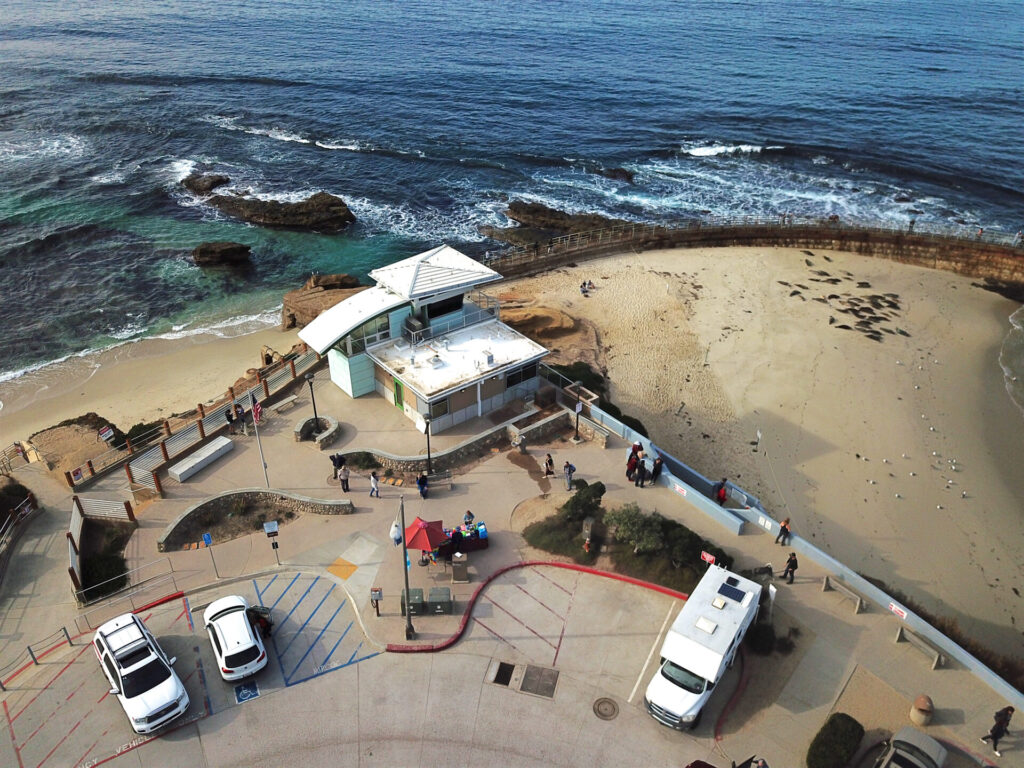
La Jolla’s protected coastline is part of what makes fishing and boating here so unique, with active marine life just steps from shore.
Table of Contents:
Key takeaways
|
The angler's roadmap: Key zones and species
The most effective way to understand fishing in La Jolla is to view the ocean environment in distinct ecological layers. Right by the beach, extensive kelp forests and rocky reefs harbor resident species. Just past these shallow ecosystems, a massive underwater canyon plunges rapidly, creating powerful currents that pull bait and migratory marine life directly toward the coast. Farther out, offshore banks provide access to large pelagic fish for which San Diego remains famous.The La Jolla kelp beds
The kelp forests sit relatively close to the shore, offering a highly productive environment for coastal angling. These giant seaweed beds provide shelter and hunting grounds for a wide variety of resident fish.- Primary species: Calico bass, sand bass, California sheephead, rockfish, sculpin, and lingcod.
- Tactics: Anglers target the edges and interior gaps of the seaweed fields where predatory fish wait for food.
- Local insight: The bite changes by the hour as the tides shift. Watching for groups of diving seabirds often reveals exactly where baitfish are schooling.
Sandy transitions and flats
Between the kelp beds and the deep drop-offs lie flat, sandy regions. These areas require a completely different approach but offer excellent rewards for patient anglers.- Primary species: California halibut.
- Tactics: Anglers keep drift-lines moving directly along the sandy bottom where these camouflaged flatfish wait for prey.
- Local insight: Focus efforts on the clear, sandy patches that border the heavy kelp structures.
The La Jolla Submarine Canyon
The Scripps Submarine Canyon is a dramatic geological feature that drops to depths exceeding 900 feet less than two miles from the beach. This canyon acts as a massive natural funnel for deep-water marine life, making it one of the premier La Jolla fishing spots.- Primary species: Yellowtail, white seabass, Pacific bonito, and seasonal pelagic species.
- Tactics: Deep-water jigging and live-bait fly-lining along the steep canyon walls produce the best results.
- Local insight: Because this deep trench sits incredibly close to the shoreline, anglers do not require a large vessel to experience elite deep-sea angling.
The offshore banks
For vessels capable of traveling farther into the open ocean, the deeper offshore waters provide access to legendary game fish.- Primary species: Yellowtail, dorado (mahi-mahi), yellowfin tuna, and bluefin tuna.
- Tactics: Trolling artificial lures or drifting with live sardines over underwater banks and temperature breaks.
- Local insight: These migratory species demand heavy-duty rods and reels. Checking the marine forecast and fuel levels before leaving the safety of the bay is mandatory for private boaters.
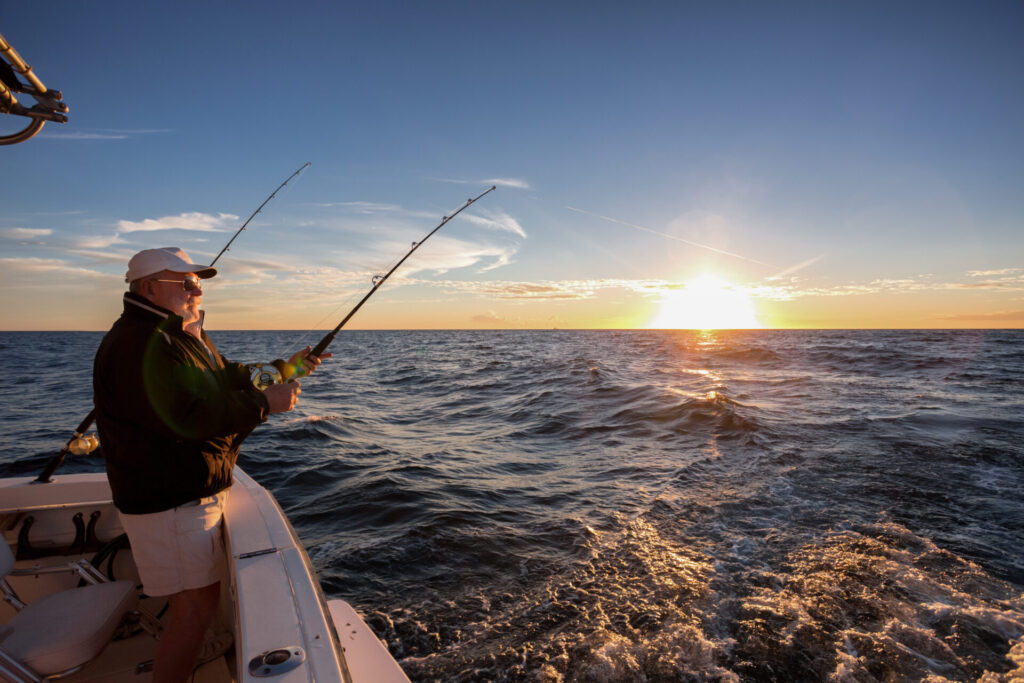
Fishing in La Jolla gives boaters access to kelp beds, canyon water, and seasonal offshore action close to the coast.
No-take zones and where not to fish
La Jolla has strict rules about where fishing is allowed. These protected areas are the exact reason the local waters are so full of life, helping garibaldi, leopard sharks, and sea lions thrive. To keep any trip completely stress-free, look out for these two main zones:- The Matlahuayl State Marine Reserve, which encompasses the waters around La Jolla Cove. The reserve is a strict zero-take zone; anglers cannot catch fish, collect shells, or disturb any marine life within these boundaries.
- The San Diego-Scripps Coastal State Marine Conservation Area, positioned directly north of the reserve. This conservation allows for limited recreational angling—such as market squid, Pacific mackerel, and sardines—using a standard hook and line. Regulators prohibit the take of bottom fish or reef species here.
Boating in La Jolla: What to know before leaving the dock
The open-ocean nature of the local coast dictates how boaters enter the water and share the water with surfers, kayakers, divers, and marine life. Depending on your vessel’s size, you have two main options for accessing the water.- Small craft and the beach launch For kayaks, inflatable tenders, and small personal watercraft, the primary entry point is the La Jolla boat launch situated at the northern end of Avenida de la Playa. This access point is an unpaved sand launch directly into the ocean surf. Because vehicles must drive straight onto the soft sand, four-wheel-drive capability is essential to prevent getting stuck. The City of San Diego enforces a strict 5 mph limit within this zone. Since surf conditions and tides can change quickly here, retrieving a boat is often more complex than launching it. Spending a few minutes observing how experienced local crews navigate the incoming breakers provides valuable guidance.
- Large vessels and marina access Large motorized boats, sportfishers, and yachts cannot use the soft-sand beach launch. Instead, owners keep their boats at the fully equipped marinas in Mission Bay or San Diego Bay, then cruise north along the coast to reach La Jolla. These nearby harbors provide the necessary docks, fuel docks, guest slips, and full-service maintenance yards required to keep a vessel in peak condition.
Sharing the water safely
The waters near the famous sea caves and bluffs attract heavy traffic from diverse user groups. Maintaining safety requires adherence to three core principles:- Give wildlife space: Marine Mammal Protection Act regulations require boaters to stay at least 50 yards away from harbor seals and sea lions. Boaters should maintain a steady, predictable course and avoid circling the animals.
- Watch for swimmers and divers: Kayak tour groups and snorkelers frequent the nearshore waters. Vessel operators must remain vigilant and steer well clear of red-and-white or alpha dive flags.
- Respect marked zones: The city clearly demarcates swim zones, surf zones, and vessel launch lanes. Local authorities strictly enforce these boundaries to protect individuals in the water.
FAQs: Boating and fishing in La Jolla
|


